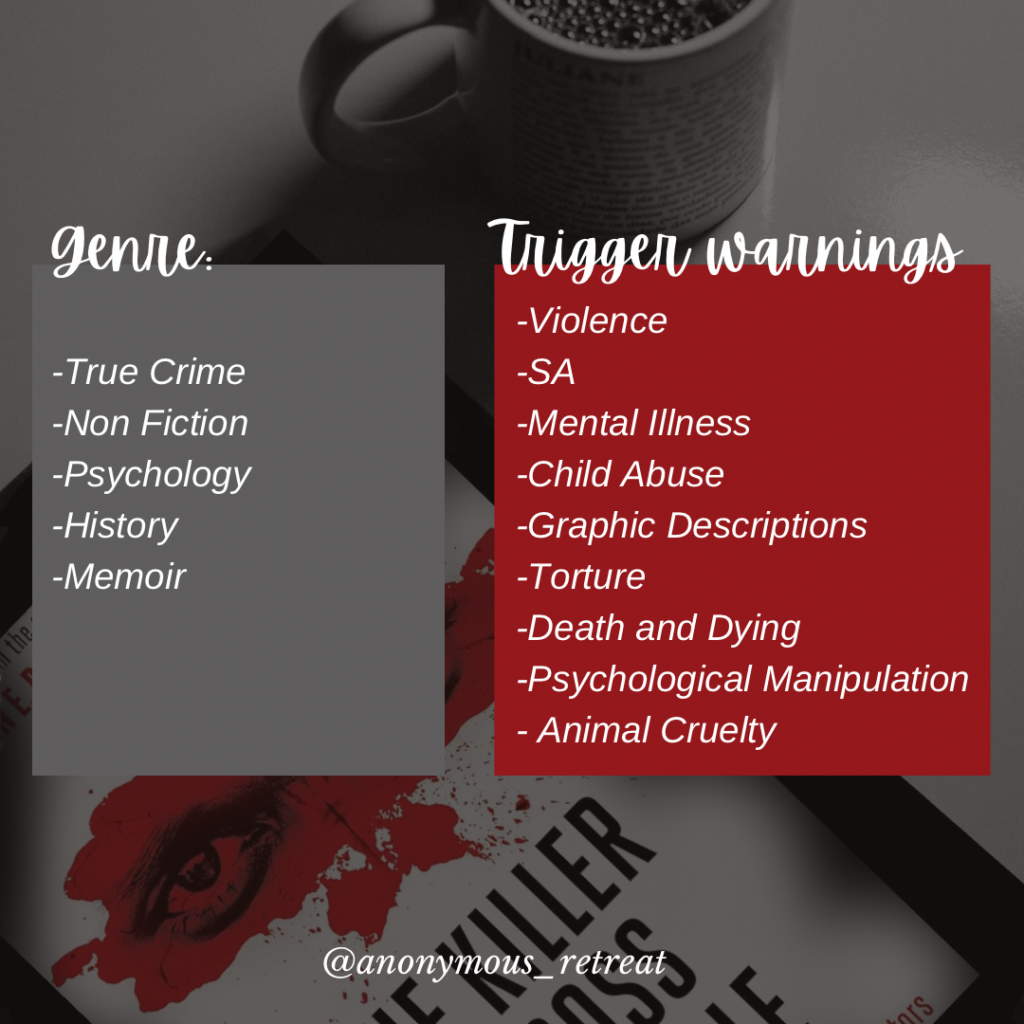
“The Killer Across the Table” by John E. Douglas and Mark Olshaker dives into the minds of four infamous murderers. Drawing on Douglas’s FBI profiling experience, it delivers a clear look at their psychological and behavioral traits.
Case Studies
- Joseph McGowan
A pedophile and child murderer. Douglas explores how an ordinary life can hide monstrous impulses. - Joseph Kondro
A manipulative child predator. He blended into society while committing heinous acts. - Donald Harvey
Nicknamed the “Angel of Death,” this healthcare worker killed multiple patients. His case highlights issues of trust and vulnerability. - Todd Kohlhepp
A real estate agent turned serial killer. His double life reveals factors that drive violent behavior.
Profiling in Action
Douglas and Olshaker pair these case studies with reflections on criminal profiling. Moreover, they examine the psychological drivers behind each killer’s actions. Through interviews and meticulous analysis, they reveal the complex nature of evil—and the toll these investigations took on Douglas himself.
Insightful and Educational
One strength of this book is its educational value. For instance, the authors unpack profiling techniques in simple terms. As a result, readers gain a rare glimpse into the methods used to identify serial killers. Additionally, the blend of psychology, criminology, and law enforcement makes this a go-to resource.
Personal and Engaging
Douglas’s firsthand accounts add authenticity. His interviews with killers like McGowan and Kondro feel tense and immediate. Consequently, you get the sense of sitting right across the table from them.
Thought-Provoking Reflections
Beyond the cases, the book prompts broader questions. It looks at how upbringing, environment, and trauma shape criminal behavior. This encourages readers to rethink notions of culpability and the possibility of rehabilitation.
A Balanced Perspective
Despite the dark subject, the authors maintain humanity and empathy. Douglas shares the personal cost of his career—his sacrifices and dedication to victims’ families. Therefore, the narrative feels both respectful and gripping.
A Must-Read for True Crime Fans
“The Killer Across the Table” stands out in the true-crime genre. Its meticulous research and compelling storytelling engage both seasoned aficionados and newcomers. Ultimately, it offers deep insights into the nature of evil and the quest for justice.
Conclusion
In summary, Douglas and Olshaker have crafted a masterful blend of true crime and psychological analysis. This book remains a thought-provoking, informative, and utterly captivating read. Whether you’re an experienced true-crime buff or new to the field, you’ll find much to learn—and much to ponder.